Two jars of honey can look almost the same on a store shelf, yet one costs more, tastes stronger, and turns thick and grainy within a few months. Shoppers comparing raw wildflower honey with a bottle of regular clover often wonder if the difference is real or simply a matter of marketing.
The difference is real, and two separate changes create it. The first is the floral source, since one honey comes from a mix of seasonal blooms and the other comes mainly from clover. Processing is the second, because raw honey is only strained, while regular supermarket honey is usually heated and finely filtered before bottling. Clover honey can be sold raw too, which means “regular” in this comparison refers to the heated, filtered style found on most grocery shelves.
Floral Source: Mixed Blooms vs. Clover
The nectar source sets the base flavor, color, and aroma of honey long before processing begins. Clover and wildflower start from very different floral mixes.
One Dominant Bloom in Clover Honey
Clover honey comes mainly from white clover and sweet clover, which grow widely across North America in pastures, fields, and roadsides. Beekeepers place hives near large clover stands, and the resulting honey tends to taste similar from one batch to the next. That consistency is one reason clover became the standard supermarket honey in the United States.
A Seasonal Mix in Wildflower Honey
Wildflower has no single dominant source. The final blend of nectars depends on several factors:
- The region around the hive
- The season of harvest
- Rainfall and temperature
- Trees and shrubs in bloom
Two jars from different farms, or even different years, can taste noticeably different. That variety is part of the appeal for many buyers, since no two harvests taste quite the same.
How Raw and Regular Honey Are Processed
Processing is the second major change, and the two honeys follow different routes from hive to jar. Both start the same way, then split at the following steps:
- Beekeepers remove the wax cappings and spin both honeys from the comb in an extractor.
- Raw honey passes through a simple strainer that catches wax and debris, while regular honey is often forced through fine filters that remove pollen as well.
- Raw honey stays unheated or only gently warmed, and regular honey is heated to slow crystallization and help it move through filters and bottling lines.
- Regular honey is often blended from many sources for a uniform look and taste, while raw honey is usually bottled in smaller, single-source batches.
- Raw honey goes into the jar with its pollen, enzymes, and natural cloudiness intact, and regular honey reaches the shelf clear, uniform, and largely free of pollen.
Heating causes the largest loss of natural enzymes. Pasteurizing honey at 78 °C (about 172 °F) for six minutes causes a 15.5% reduction in enzymatic activity, and the loss keeps growing during storage. Fine filtering also strips out pollen, which removes the clearest evidence of where the honey came from.
Try the difference raw processing makes with our Wildflower Honey. Smiley Honey harvests this honey as the first crop of the year in the Florida Panhandle, then strains and bottles it without heat. The finished jar holds pollen from over a dozen different plants, along with the natural enzymes that pasteurization reduces.
Appearance and Texture in the Jar
Color, clarity, and texture reveal the floral source and the processing as soon as the honey is bottled.
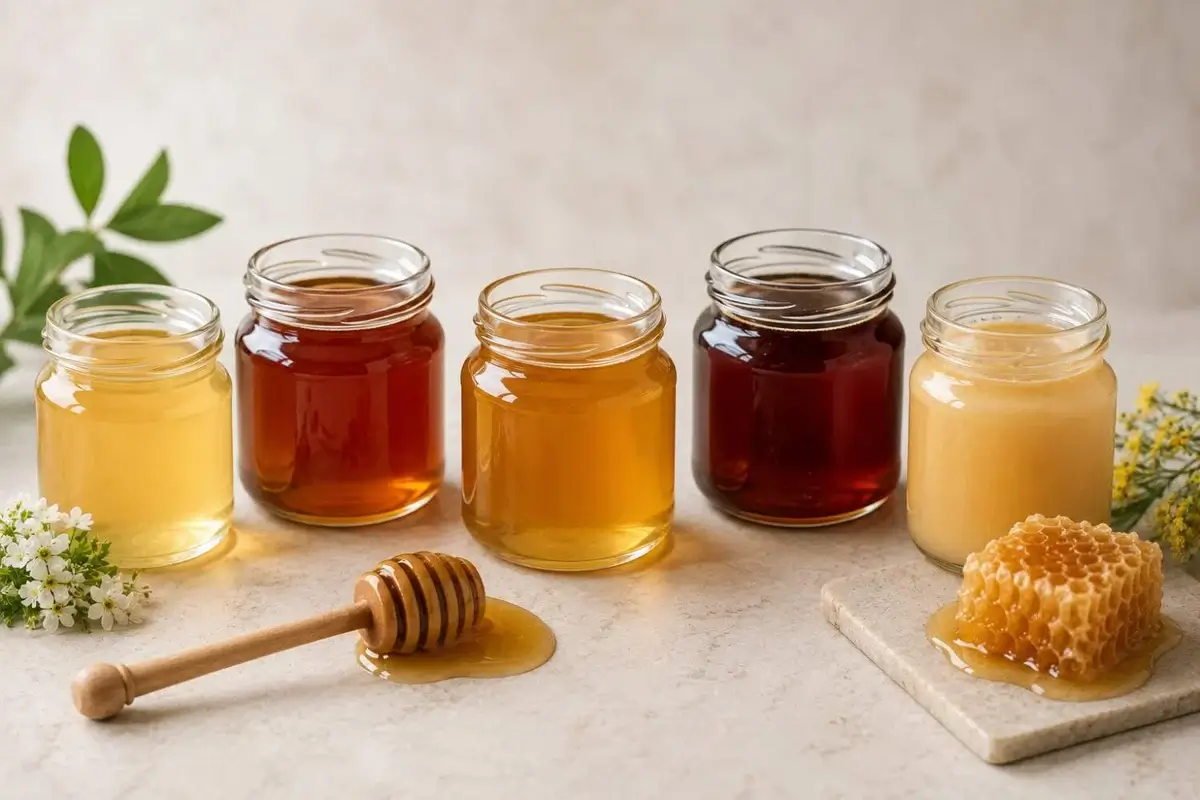
Wildflower honey ranges from light amber to deep reddish brown, depending on the blooms behind the batch, while regular clover honey is usually a uniform pale gold. Raw honey also looks slightly cloudy because pollen and tiny wax particles remain in the jar. Filtered clover honey, by contrast, looks clear and bright.
Raw honey often pours thick and slow, and heated clover honey tends to be thinner and more runny. Crystallization follows the same pattern, and raw honey turns grainy sooner because pollen and particles give sugar crystals a starting point. Heating delays the process in regular honey, though clover still sets over time because of its glucose content.
Wildflower vs Clover Honey Flavor
Flavor is the change most people notice first, and the gap is easy to detect when both honeys are tasted side by side.
During a slow Sunday breakfast, a spoonful of regular clover honey tastes clean, mild, and simply sweet. The flavor fades quickly and leaves little behind, which makes clover easy to pair with almost anything.
A spoonful of raw wildflower at the same table tastes noticeably different. The sweetness arrives with floral, fruity, or earthy notes, depending on the blooms behind that batch, and the finish lingers longer. Darker wildflower honeys can carry hints of molasses or spice, while lighter batches taste softer and more floral.
Nutritional Value of Raw vs Regular Honey
Both honeys share the same basic makeup of natural sugars and water, and the nutritional differences come from processing and floral source:
- ✓ Pollen stays in raw honey and is often removed by fine filtering
- ✓ Natural enzymes remain active when honey is not heated
- ✓ Antioxidant levels vary with floral source and color
- ✓ Calories and sugar content stay nearly the same in both
Color offers a useful clue, since darker honey tends to carry more antioxidants than light-colored honey. Dark buckwheat honey contains about 11 times more phenolic compounds, the plant antioxidants found in honey, than pale acacia honey. The measured levels range from 185.76 mg GAE/100 g in buckwheat down to 16.90 mg GAE/100 g in acacia honey.
Clover usually falls toward the lighter end of that range, while darker wildflower batches generally contain more. Raw honey is still a sweetener, though, and the nutritional differences are modest rather than dramatic.
Best Kitchen Uses for Wildflower and Clover Honey
Flavor and texture decide which honey works best in a recipe, and the two honeys suit different jobs in the kitchen.
Where Clover Honey Works Best
Clover’s mild flavor blends into baked goods without changing the taste of the recipe. The honey sweetens tea and coffee cleanly, serves as a neutral base for marinades and glazes, and adds simple sweetness to yogurt or toast. Long cooking reduces the floral notes in raw honey, which makes clover the more practical choice for roasting and simmering.
Where Raw Wildflower Honey Works Best
Raw wildflower honey adds depth to dishes where the honey flavor should stand out:
- Breads and granola that benefit from a richer sweetness
- Cheese boards, especially with aged cheeses
- Marinades and glazes for savory dishes
- Tea, stirred in once the drink has cooled slightly
Adding raw honey at the end of cooking, or after the heat is off, keeps more of its floral character. Darker batches pair especially well with strong flavors like blue cheese and roasted nuts.
For a first taste, the 2-ounce glass hex jar of our Wildflower Honey is enough to try on a cheese board or stir into a slightly cooled cup of tea. The wildflower we bottle at Smiley Honey runs dark and robust, with a reddish color that Florida locals call “red honey.” One small jar makes the bold flavor easy to judge before you move to a larger size.
Label Terms and Price Differences
Labels can make the two styles easier or harder to tell apart, since several common terms sound similar but mean different things.
“Raw” describes honey that has not been heated beyond hive temperatures and has only been strained. The term has no federal definition, which means trusted producers explain their process clearly on the label or website. “Pure” or “100% honey” only confirms that nothing has been added, and honey with that label may still be heated and filtered.
“Unfiltered” means the honey was strained to remove wax and debris without fine filtering. “Wildflower” describes nectar from mixed blooms and says nothing about processing, which is why a wildflower jar may or may not be raw.
Raw wildflower honey usually costs more than regular clover honey. Smaller batches, regional sourcing, less blending, and seasonal harvests all raise the cost, while large-scale clover blends benefit from volume and uniform processing.
Common Questions About Wildflower and Clover Honey
Can wildflower honey replace clover honey in recipes?
Yes, wildflower honey can replace clover honey in equal amounts in most recipes. The sweetness level stays about the same, though the finished dish will taste stronger and more floral. Lighter wildflower batches work best in delicate bakes, while darker batches suit spice cakes, barbecue sauces, and granola.
Which honey suits someone who prefers a mild taste?
Clover honey suits a mild palate best, with clean, simple sweetness that blends into food and drinks. Wildflower honey varies far more from batch to batch, and darker harvests carry a bold, robust flavor. Anyone curious about wildflower can start with a small jar and try it first in tea or on toast, where the flavor is easy to judge.
Does raw honey need to be refrigerated?
No, raw honey keeps best in a sealed jar at room temperature, away from direct sunlight. Cold temperatures speed up crystallization and make the honey hard to spoon. When a jar does turn grainy, a warm water bath returns the honey to liquid without overheating it.
Takeaway
Raw wildflower honey and regular clover honey differ in two clear ways, starting with the flowers behind the nectar and ending with the processing before bottling. Those two changes affect color, clarity, texture, crystallization, flavor, and the amount of pollen left in the jar. Clover suits shoppers who want a mild, consistent sweetener for everyday cooking. Raw wildflower is the better fit for those who value layered flavor and honey that stays close to its natural state. Tasting both side by side remains the most reliable way to decide which style belongs in your pantry.
Comparing jars at home is easy with the raw honey lineup at Smiley Honey. Alongside Wildflower Honey, we bottle varietal honeys such as Orange Blossom Honey, Sourwood Honey, and Tupelo Honey from the river basins of Northwest Florida. Pairing a light honey with a dark one shows the difference floral source makes on a single spoon. Households that use honey daily can order Wildflower Honey in a 1-gallon plastic jug, and the full range is available at smileyhoney.com. Set out two small spoons, taste slowly, and let your own palate choose the next jar.
Read More: https://hal-stuff.com/how-much-does-honey-cost-per-pound-in-bulk-in-2026/